

CrowdFund
The industry is dead, long live the industry
Gerhard Maree | 26 Mar 2014 9:28 AM
Bach had the church, Haydn had the Esterházy’s and The Beatles had their fans. Shortest history lesson on music patronage, ever. It’s simple, right? That’s how they paid the bills, so to speak. That is how they kept the roof over their heads and put food in their musical bellies. Or did they?
It would be safe to say that this is pretty accurate for Bach and Haydn but did The Beatles really build their success on the backs of an army of fans? Well, yes and no. They certainly managed to give us the White album and Sergeant Pepper because of the support and adoration of their fans but if we rephrase the question into “Did their fans foot the bill to record these great albums?” then the answer would be “no”. Sure, they were certainly successful enough by then for us to argue that the money made from their plethora of hits would enable them to afford studio time at Abby Road and the freedom to create these and other pop masterpieces. But who paid for the first one? Who put down the money so that the Fab Four could buy equipment to record, or pay for beds to sleep in and petrol for the van to tour?
Cold hard cash
As is the case with almost any successful artist or group from the 20th century, a record label provided the cold hard cash. And a lot of it! Because, let’s face it, there was money to be made. A great return on investment, surely. One simple reason was that recorded music could travel to more places more often when compared to their human creators and by the time The Beatles came around the steady shift from live to record had already begun. The record industry became the music industry. Now, this may seem like semantics but there is a fundamental difference in purpose and motivation. How many times have we not heard a band saying that they are touring to promote their new album? Just let that sink in for a second. An artist records her or his music, essentially capturing a live medium into hard copy, and performs this music at concerts in order to encourage fans to buy said recording. Admittedly, this made sense for a while simply because it was working; records were being sold in their millions. But there were two problems with this business model: technology and forgetting the needs of the fans. Let us start with the first.
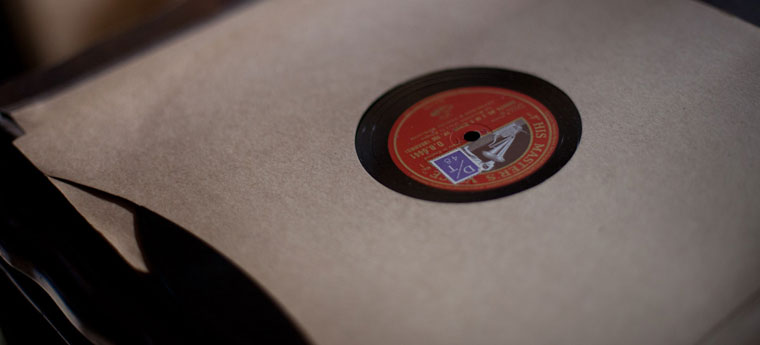
Recorded music was being distributed to the ends of the earth and the evolution from wax cylinders to vinyl to cassette tapes to CDs to MP3 format meant that duplication became easier, more durable and most significantly it got cheaper. Cheaper to the point where it is now possible to duplicate music at virtually no cost (unless your boss paid for your Mac, then it would be at zero cost). And therein also lies the problem for the record industry. Digital reproduction means that the medium with which recorded music is distributed has almost no value anymore because we, the users, can literally make countless of copies ourselves. This is an extreme case of supply and demand! Remember, we are not talking about the musical composition here but instead the actual physical media; the packaging, if you will.
Considering the fans needs
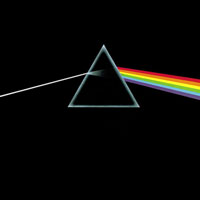
We need to stop looking at this as a crisis and instead see it as an opportunity. The landscape is changing and we need new maps, but we also live in a time where we can influence the cartography and we should grab this opportunity with both hands! Platforms like Kickstarter and Indiegogo are making creative projects possible through the novel, yet elegantly simple means of crowdfunding. If you are not sure what this means, here is the crux of it: instead of getting funding from one source (record company for recording an album, studio for making a film or publisher for writing a book) creators go to their followers and ask them to fund it instead. They are, after all, the ones who are most likely to end up buying the book or going to watch the movie (or probably just torrenting it off Pirate Bay). In other words, instead of one source providing a lot you get many sources each providing a little. We need to be clear, though, that this is not charity. And it shouldn’t be! Charity does not lead to sustainable art industries. This is a transaction, but instead of waiting for the product and then purchasing it, fans can contribute to the creation and receive the product once it is finished.
Principles of crowdfunding
So how does crowdfunding help musicians? Up to now the most common use was seen with the recording of albums. A band will let their fans know how much money they need to record a new album and then ask them to pledge; South Africa’s own Red Huxley being a recent example of this. Often there is tiered pricing involved, so if you give R100 you get the digital download once the album is finished but if you give R150 you get a signed CD as well as a download, and if you give R500 you get all of the above along with a backstage pass at the album launch. You get the idea. This process surely goes a long way towards keeping an artist out of the red once an album is finished, and the lower costs involved nowadays to record also means that you don’t need hundreds of thousands of fans to pledge. But the industry has changed and unless you are Adele or Lady Gaga you are not going to earn a living by selling your records. Performing and touring is definitely the way forward for artists to earn money and to connect directly with their fans. So how do we shift the power to the artists and their fans and apply crowdfunding principles to live music? Well — and this is where the exciting bit comes in — it is already happening.
Songkick’s Detour is giving Londoners the opportunity to pledge money to see their favourite artists and if enough interest is created they work with promoters to bring these artist over. Similar platforms like Mexico’s Bandtastic and Brazil’s Queremos! make it possible for artists to test whether they have a big enough following in territories outside of the regular touring circuits of North America and Europe. Others, like Chicago’s GigFunder encourages fans to tweet an invite to their favourite artists and ask them to start a campaign and come to their city, or ticketing startup Picatic offering crowdfunding facilities for artists or promoters planning an event.
SA’s first live event crowdfunding tool
If the invention of social media and the subsequent interaction between artists and fans could be seen as ‘fan club 2.0’, then this is ‘fan club 3.0’. It opens up a whole new possibility for artist-fan engagement and if there’s ever a chance to get Pearl Jam to play in my city, you can bet your bottom dollar that I am telling every single soul I meet to go and put their money down. All things considered, this is not only a new way of looking at concerts; it is without question the future of live music.
For more info on City Soirée, go to www.citysoiree.co.za.