



A&R in a digital age
A&R executives are being forced to change their game. This is in part because streaming services such as Spotify and YouTube are fragmenting the music market and leaving their own digital trace, which is then used to identify suitable talent.
YouTube’s music pangs
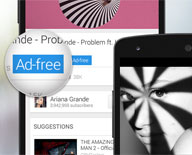
It’s been rumored for quite some time that Google is working on an on-demand music streaming service to be run through their video streaming service YouTube.

The power of false pretense
They say that money can’t buy happiness, but it can buy likes, views, shares, or followers. From the beginning of social media, users have sought to expand their networks for professional clout, financial gain, or even bragging rights amongst friends.

Live performance 2.0
Although technology may have destroyed the recorded music market, it has played a significant role in enhancing live performances. Recent developments need to be heeded by both artists and concert producers.
Reporting on SoundCloud
In the years since the rise and subsequent fall of Napster, the distribution of recorded music has, for better or worse, become primarily about maximising exposure.

Smart artists, smart fans
The internet age has drastically altered the dynamics of the interaction between corporations and their customers. Talking down at consumers, for instance, is less preferable than engaging them in a conversation that can later lead to a commercial transaction.

Superfans and house concerts
For fans of mainstream pop culture and arena-filling acts, house concerts are an unheard of phenomenon. You won’t see Katy Perry or Kings of Leon announcing a summer house concert tour. However, they can be an integral part of an up-and-coming artist’s touring strategy.

Music Finance 2.0
The famous economist Joseph Schumpeter once coined the term “creative destruction” to describe the process whereby we constantly destroy old business models by innovating and creating new ones. With the decline of the traditional record label deal, we have now seen the rise of new ways of financing and profiting from the music business.
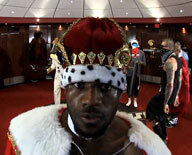
Harnessing the Harlem Shake
Baauer’s “Harlem Shake” was the first single by an unknown artist to enter the Billboard Hot 100 chart at number one. Here we examine how it happened and derive broader implications about the monetisation of YouTube content based upon the context of the song’s success.
A note on SoundCloud
SoundCloud is one of the leading sources of audio sharing on the net, with 250 million active monthly users up from just ten million two years ago.

Spotify’s time
The music industry once again is on the tipping point of another digital transformation, this time moving away from CD’s and downloads and into the world of streaming services like Spotify, YouTube, and Pandora.
Ad nauseam
Advertising revenue is quickly becoming critical in the music industry. This is in part because general mobile and tablet advertising income currently exceed desktop ad receipts by a factor of seven (desktop ads on their own are doing exceedingly well, showing an annual 7% growth rate).

Apple, Google, and the streaming stakes
Apple and Google, the two companies that have most changed the fortunes of the music industry, are shifting their weight in preparation for the future of streaming-based music.

Music intelligence for sale
Information is changing the music industry; not only in the ways we consume and discover music, but as well in the ways companies are arming themselves for competition.

Understanding crowdfunding
Musicians, artists, and music business entrepreneurs need cash to start a project and nurture it to fruition. They are hardly unique in this respect, and face many of the considerations that the general public does: ie. is the need for money for the short-term or for the long-term, is there a small or a large amount of risk involved?

Streaming’s global momentum
In January, various speakers at the MIDEM Show in Cannes suggested that music streaming may no longer be considered a complement to traditional music sales but the new way to access music. The momentum seems to be global.

The cost of free music
When it comes to recorded music, today’s consumers enjoy a free ride and seem to have all the answers. Song sharing is there for the taking and, in any case, the old music sales model is archaic. But if out with the old and in with the new is stylish in music, the same is not true of music recordings.

The economics of EDM
The EDM industry has exploded into a lucrative business platform. Attendance at the top twenty global festivals jumped from 1.9 million in 2009 to over 3.4 million in 2013. As well, digital sales of recorded music, according to the International Federation of the Phonographic Industry, IFPI, grew by 9.8% in 2012 and much of this, it is suggested, is due to EDM (the 2013 data is likely to be even more impressive).