


Opinion
Dookoom: screaming about injustice
Zethu Gqola | 20 Oct 2014 3:36 PM
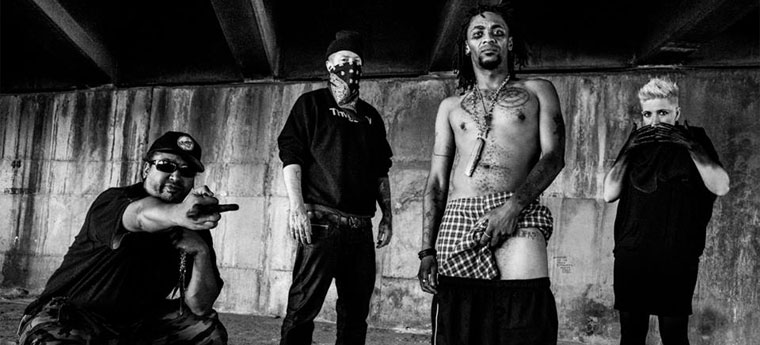
Kak gevaarlik and here to claim back the throne as the original Afrikaans gangsters, Dookoom have dropped a four-track EP, A Gangster Called Big Times. With the controversy caused by the debut single "Larney Jou Poes", there are no sorry’s here.
Isaac Mutant, Human Waste, Spooky and DJ Roach are back with another graphic offering that make Ninja and Yolandi’s rap game look like child’s play. Finally going mainstream, the four-track album features 17 minutes and 11 seconds of menacing synths, crisp percussion and hard rap. Opening with the controversial "Larney Jou Poes", the album track list also features "Electric", where Mutant confesses his own faults and challenges the listener to comment on the group’s hard sound with "I Want You", which touches on Mutant’s life during his time running with gangs, as well as the dangerous lifestyle of the Cape Flats. It ends off with "Die Slow", one of those 'If you don’t like our music, go kill yourself,' kind of songs.
Unless you’re a hardcore lover and follower of underground grime, trap and perverted pop, then Dookoom is a group that you’ve probably never heard of before.
SA hip hop is finally interesting
And now that you do know about Dookoom, it is most likely because of their hair-raising, twitch-inducing single "Larney Jou Poes". "Larney" has become the anthem for the freeing of the shackled farm worker, and thanks to its raw, unfiltered and menacing lyrics, a lot of governmental personalities, farmer’s unions and anyone who isn’t black, basically, are pissed off. Which is good – pissed off initiates change and demands answers and explanations. And South African hip hop is finally interesting.
Criticised by AfriForum as representing extreme racial prejudice and hate, the video for the single, directed by newcomer Dane Dodds, features pitchforks, burning tyres and the constant use of the word 'poes'. Watching the black and white video is like seeing the beginning (or end) of a twisted apartheid film. All in the name of sparking conversation, not violence, Dookoom has achieved something that South African music (and hip hop) have failed to do or haven’t been interested in doing for a long time; producing a hard-hitting urban song that encourages even the most ignorant of urban youths to want to change the inequalities between South Africans caused by history.
Poster child for the “white genocide”, Steve Hofmeyr is one of the less-than-pleased listeners who, after hearing the song and seeing the video, immediately tweeted, “Romanticising violence and glorifying anarchy in the most violent country in the world? Grow up and man up Dookoom. Get a family, job and responsibility.”
Expression of frustration
Is it political hip hop or hate speech? The history of the Cape farm workers would definitely suggest the former. “There’s a difference between expressing anger and inciting violence,” music producer Human Waste told News24: “Let’s focus on why people are angry. Social injustice. Surely treating workers worse than animals is an incitement to violence?
“We want people to feel uncomfortable, like we’re bringing it to your doorstep. Our anger is coming to your home. It’s not a threat of violence; it’s an expression of frustration at the legacy of the system,” he said.
Maybe the song and video are intimidating because they dispel the idea that farm workers are ignorant and timid people who work hard and let bygones be bygones. Or, maybe it’s intimidating because there are times when lyrical front-man Isaac Mutant is so unapologetically angry that he sounds like the devil himself.
Either way, the resulting concoction we now know as "Larney" is not for everyone, yet it’s impossible to ignore.

Although Die Antwoord are now seen as the top dogs in Afrikaans rap, it’s Mutant who popularised this demonically aggressive industrial punk sound, which drills down so menacingly with its befokte jits lyrical offering, that you get sucked into what he’s feeling and for a split second you’re angry too, then the sound spits you out frightened.
AfriForum takes legal action
Their sound perfectly matches their self-description: “Dookoom is an emotional response to a world most people are too scared to confront. It’s a state of mind. It’s the darkest corner of your psyche, a world of shadows and demons you can either confront, or be haunted by.”
“Farmer Abraham had many farms/ And many farms had Farmer Abraham/ I work on one of them and so do you/ So let’s go burn ‘em down,” are the introductory lyrics of the single that has pushed AfriForum so far that it’s taking legal action against the group, under the Promotion of Equality and Prevention of Unfair Discrimination Act.
Dookoom does an excellent job in bringing light to the unsettling history of payment in papsaks (bags of cheap wine) and deep roots in slavery, and the struggle of workers on Cape farms.
“I actually have family in Vredendal who come from that kind of background. And I was pissed off enough to do a track about it,” Mutant told News24.
With the political persistence of Julius Malema, these cats will surely stick around, especially because they’ve tapped into a new market that wants them to keep screaming about injustices from the bottom of their lungs.
Download their album on Bandcamp, and familiarise yourself with their sound by heading over to their Soundcloud page.
Article source: www.groundup.org.za