


Industry news
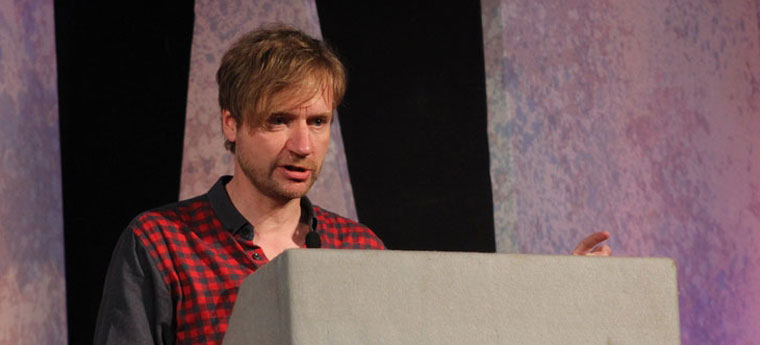
Take over, give the world your culture - Tim Renner
Tim Renner may have ruffled a few feathers after his talk at Music Exchange this year - he laid it out bare, the end is nigh for; record labels, the CD, mass media, and one of the world's dominating cultures...
For those holding onto the old regime of the music industry it may seem all doom and gloom as their power of control starts to shift, but for artists, all artists - regardless of fame and fortune - the playing field is starting to level out.
Awarded the WEF's Global Leader for Tomorrow in 2003, Renner can speak with some certainty about what the future holds, and Africa features front and centre, but we have to want it badly enough to take it, he says.
Democracy of digital
Passion and infrastructure, that's all it takes, according to Renner: "My key message to you in South Africa, and also other parts of Africa, is that that's simply what you have to do, and times have never been easier, never been better to do so."
Revolution drives change, and like the fall of the Berlin wall did for Germany, so did the end of Apartheid do for South Africa. And here we are, well into the digital revolution, and it's changing the music industry for the better, says Renner, we just need to keep in heart the spirit of that revolution.
It's no secret that record labels aren't rolling in it like they used to, and a few have had to merge or close shop. Why? Because they've, in some respects, become redundant to emerging artists - you don't need them to record, distribute or communicate your music to the world - you have all the tools at your fingertips, and that's the beauty of the democracy of digital - it's opened up an entire industry to those who many not have had access before.
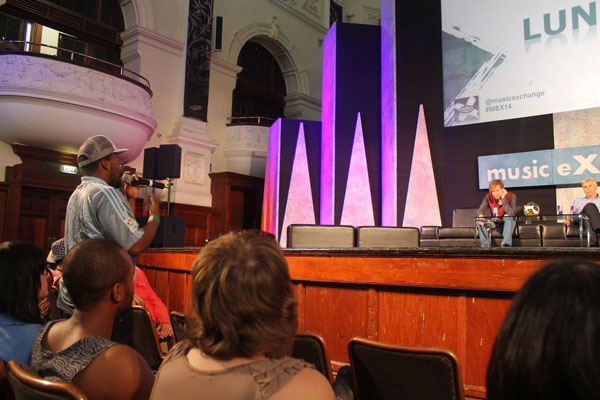
Renner used crowdfunding as an example of an obvious source of potential investment - have your friends, family, but most importantly, your fans invest in you.
"Crowdfunding is like being a big act, planning a tour and preselling your tickets," explains Renner. You just need a story to tell, and you need to communicate it. But Jeremy Loops and Roland Albertson will tell you, easier said than done, as both their campaigns never reached their monetary goals. (Perhaps a session of effective crowdfunding is needed at Music Exchange 2015.)
Domination of US culture
Renner next pointed out that the top awarded artists at the Grammy's this year did not come from the US; they in fact came from New Zealand - Lorde, and France - Daft Punk.
"I don't believe there is this big dominance of American culture. That is the only point where I disagree with Yasiin (Bey - another keynote speaker at the conference) - yes, some people are taller than others, but some people appear to be giants from a distance. The closer you come, the more you will see that they are pretty small."
While there are quotas in place on South African radio stations to play local music, there is a tendency for US culture to dominate our airwaves, and some local artists feel this is the reason they don't get the half the support their international brethren do from local audiences on home soil. In order for local artists to get any airplay, they need to conform to what radio stations are more likely to play - the music eventually loses its South African-ness.
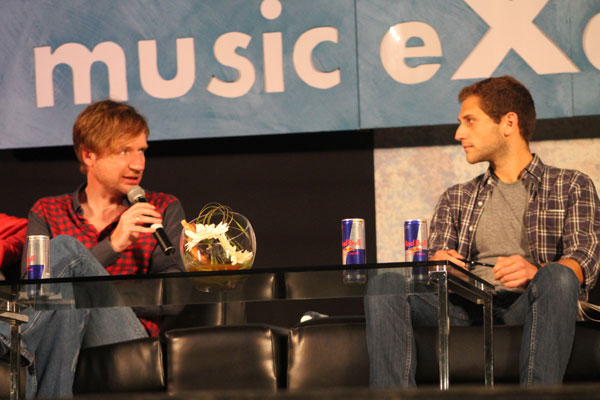
In order to break into international markets however, Renner believes you've got to draw from your roots: "We have to understand that we carry something in us - our traditions and our history - we have got stories to tell - we should be telling our stories, wherever we come from... Why should we sell them something they've already got?"
Art is about disturbing
Over decades the medium for music distribution has evolved - from vinyl to cassette to CD to digital - but record companies at the dawn of digital refused to embrace it - today, they're paying the price. The death of the CD spells the ultimate death of control, because now everyone can do it. It means freedom, explains Renner, in the form of streaming - "taking music where it may not have been possible before."
Streaming, in turn, heralds the death of mainstream media. The exclusivity of FM radio will be nullified by internet radio. A medium once controlled by those with economic power and political influence will no longer be able to sustain their mass media as digital provides listeners with more choice than they've ever had before.
"The idea of radio is not to disturb anyone. You have to be in the background - don't want them to swop over to another station, so we play something that doesn't excite you, but doesn't disturb you either. But that is not what art is about. Art is about disturbing, art is about having something to say, art is about being unusual, and in this way, we don't fit into the radio programmes as we use it worldwide," explains Renner.
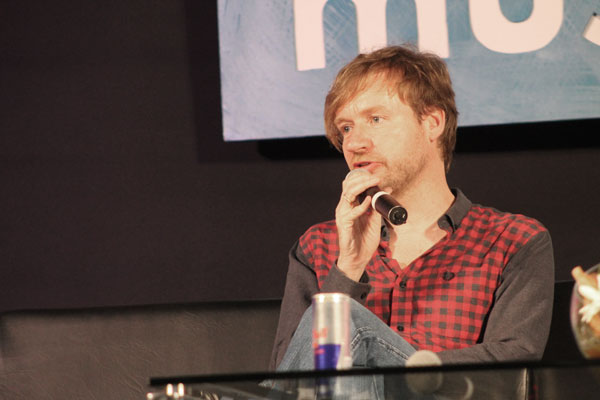
But he believes change is coming - even a video is not that difficult to produce independently using the devices we use every day. He used Die Antwoord's video for Enter the Ninja as an example of allowing then to cross over.
"It's the end of the dominance of modern culture, it's your culture that counts, it's your own culture's message that counts, and your history, as diverse as it is, the fights that are still happening, the uncertainty that you still have got here - it's value when it comes to culture - it's you... Take over, give the world your culture," concluded Renner, to enthusiastic applause.
Tim Renner is the managing director of Motor Music, and developed artists such as Rammstein, Portishead and 2Pac.
For more info on Music Exchange 2014, go to www.musicexchange.co.za.
View the gallery from day one.