


How to
When should you create merchandise?
David Chislett | 3 Mar 2015 6:45 AM
How long is a piece of string? If you are serious about your band and intend to be in the business for the long haul and actually make a career out of it, it is never too soon to start creating your merchandise.
Do it as soon as the band can afford to. Because merchandise is such a good marketing tool and because it can also assist with your earnings, it is a perfectly acceptable idea to start producing it as soon as you can. Of course make sure that you have the name of your band or group finalised first, so that you don’t have to change it and throw all your merch away after two weeks!
Financing you merch
There are several ways in which you can finance your merchandise. Firstly, get in touch with tee shirt printers or manufacturers, find out what range of products they make and their prices. Make sure you find out prices for a wide range of numbers. That is, for runs of 10, 20, 50 and 100. Once you know how much it is going to cost you, you need to think about the money. The first way is for the band to put aside money earned from gigs and so on, until you have enough money to make the goods. This is a wise way of doing it because then no one loses any money, there is no risk and the merchandise that is sold becomes pure profit in a sense, because all the money comes back into the band. However, if you are in a hurry to get going, or if the need to earn revenue is immediate, you can look into other avenues.

Find an investor
One method that many bands have used is that one band member who has a good job, or whose brother, parent or good friend has the cash to put out upfront, pays for the merchandise to be made. What then happens is that, until the manufacturing costs have been covered, all monies earned from merch go back to that person. Once the goods are paid off, all the money then goes to the band. This method really helps if you are struggling to get going and need a hand up. But also remember that if you are struggling to get going in the first place, it is going to be hard for you to earn the money to pay this loan back. So think hard and plan carefully before
you decide to go this route. Merch is important, but you don’t want to get yourselves into debt over it!
Talk to other bands
Then the question of how to create your merch raises its head. The best thing to do is talk to other bands that have already created some. Find out the name of the person who printed their shirts or made their badges, and see if they will tell you their cost prices. Speak to several bands and find out if there is more than one supplier. Then get in touch with these suppliers and do a cost comparison. You will find that tee shirts can range in price from around R10 per shirt up to R30. But the R10 ones are very thin and simply don’t last. The trick is to be realistic about how much you can sell shirts for and not greedy about your profit margin. Just as merch is good advertising for you, you need it to be good value for your fans as well. Word will get round very fast if you make R10 shirts that fall apart after three washes and lose the logo. And then you will sell nothing. So make sure you learn about the difference in the quality of fabrics and source more than one quote before you start buying materials.
Design issues
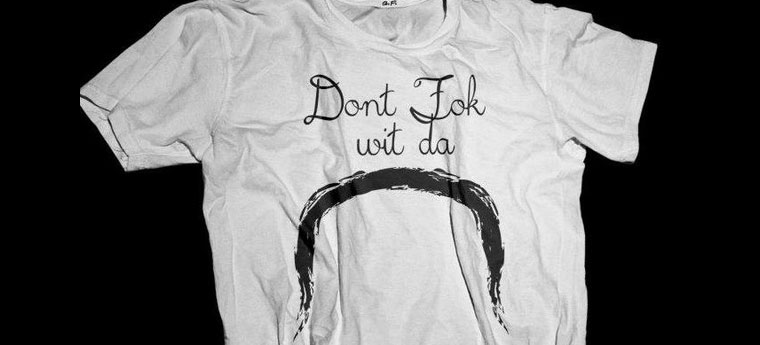
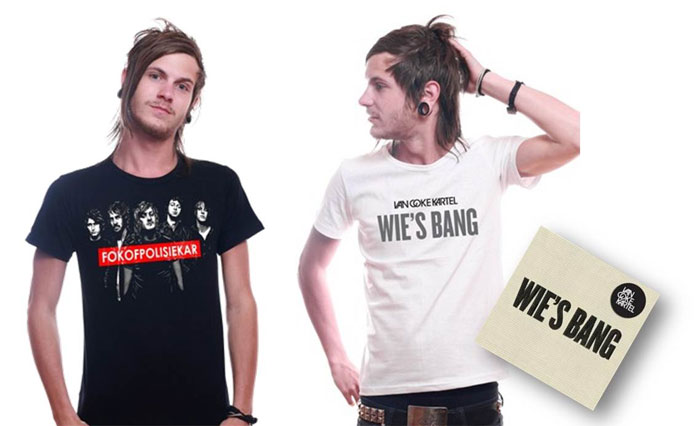
You also need to consider design issues carefully. Once you start creating merchandise you are putting your name and your logo and faces out in the public eye. It is a wise idea to have a unified trend across all the merch you make. So if you do make shirts first, think about what you want badges to look like. Is the idea you are using on the shirts adaptable to a badge? And so on. Keep you options open and don’t just run off and do things before thinking about what needs to come next. Also remember that your fans are both male and FEMALE. Girls may not like wearing big, baggy tee shirts, so make sure you get girls’ shirts made as well. And make sure that your merch targets women just as effectively as men. This is because it seems that girls are more inclined to buy merch than men are. Women are less likely to spend all their money at the bar and therefore have cash. They are also more likely to want to show their support by buying your goods. It doesn’t matter whether you are a group of men or women, appealing to either sex, it is important to remember that fans come in all shapes and sizes. So make sure that you have girls’ tee shirts and that your hats, buttons and badges also appeal to both male and female sensibilities. You will sell more, I assure you.
How much is enough?
The simple rule with merchandise is to only make as much as you can afford. Just because you can get shirts made and printed for R10 per unit cheaper if you do 2 000, don’t do that. It will take forever for a new band to sell 2 000 shirts. Remember that while you are going to make money off these shirts, they are a marketing tool and the band needs to be around to benefit from that marketing. Also, your look and your sound are growing and changing all the time. In two years’ time, you don’t want to be selling the same old tee shirt design. Times and fashions will change, and so will your band. Smaller runs are perfect because there is less financial risk, you don’t end up with old stock that is unfashionable and you can keep trying new things to keep it interesting for your fans.
Don’t take all your stock to every show you play either. It just puts you at risk of theft, loss and careless giveaways. Rather, take five of each size to each show, and 10 or so CDs. You will soon see from one show to the next how much stuff you actually sell. Carry only slightly more stock with you than you know you can realistically sell. If you are taking the merchandise angle seriously, you also need to make sure you have a reliable honest, and hardworking salesperson who handles your stuff.
Incentivise the salesperson
A good merch person is worth his or her weight in cash money. I have seen a good merchandise salesperson turn so many “maybe” sales into actual items sold, that a band is prepared to tour with her and pay for her accommodation and food. The best is to incentivise the salesperson with a percentage of the sale. So instead of giving the salesperson a miserly R100 for a night of standing around trying to sell shirts, give him 15% of whatever he sells so that he can write his own paycheck. At R100, 10 tee shirt sales gives him R150 for the night. And the more merch you have on offer, the more he can make. You don’t need someone super-cool looking to do this. You need someone who is friendly, outgoing and persuasive; someone who knows the band well, and knows the merchandise better; a person who is charming, calm and genuine. Remember you are playing in bars and nightclubs mainly, so she also needs to be of sober habits, not nervous and able to deal with people of all types and levels of sobriety.
With adequate and sensible planning, merchandise can become a massive asset to your group, in both the financial and marketing sense. But if you don’t plan it well and thoroughly, it can be a millstone around your neck that you never sell and which you lose money over. Be sensible. You don’t get merch just because everyone else has it. You get merch because you can use it to further yourselves. Remember that once you have these things you can also use them as giveaways and prizes to increase people’s desire to see you and to reward your loyal fans.
Originally published in David Chislett's One, Two, One, Two: A Step By Step Guide To The South African Music Industry. Download a free copy of the book at www.davidchislett.co.za.

[David Chislett]
David Chislett is a multi-talented South African speaker and writer. He graduated to national radio in 1994 when Barney Simon used him as a live radio correspondent on 5FM from London. David delivers a key note address, “Unleash Your Inner Rockstar” with Martin Schofield which teaches the hidden secrets of success from the music industry to businesses.