



How to
Practice makes perfect in music
David Chislett | 8 Jul 2014 6:43 AM
Practice is a vital aspect of becoming a technically accomplished and reliable, or “tight” player. What is often not emphasised enough is that in order to become a good musical unit, plenty of practice together is also required.
This is only logical as any kind of group one is bringing together is a collection of individuals, often with very different styles, approaches, disciplines and levels of expertise.
Discover strengths and weaknesses
Regular rehearsal is important for more reasons than just fine-tuning the ability to play together. Practice sessions are also a unique arena in which members can get to know each other and feel out each other’s strengths and weaknesses. The practice room is a safe creative space where members can try out new things, bring ideas to the fore and generally go about the business of trying to improve the musical unit. It is also the place where, as a unit, you can compose new music and work on material that members have brought. If you hope to be an original band, this is the space where arrangements, melody and harmony form, as the musician contributes their creative touches to a song, or collaborates to take an idea from its conception to completion as a full song.
Turning ordinary songs into something special
Any musical enterprise has its collection of songs, which need to be slick, well put together and played according to the correct structure. Rehearsal is the place where these arrangements are put in place and this structure is finalised. Whether you are a unit that has one primary songwriter bringing finished work to the practice room or write as a collective, it is always a good idea to leave the final structure and arrangement to be resolved by the band playing the songs in the rehearsal room. What this means is that the introduction, order of verses, where the bridge takes place, any solo breaks and so on need to be put together and rehearsed thoroughly before performance. All instrumentalists bring a unique feel and approach to their parts, and these unique signatures can and will lift a song if each band member is allowed to contribute. It is this personal 'X' factor that can take a fairly ordinary song and turn it into something special.

Allow the space to really play to your strengths. Have the courage to play with structure and parts in order to bring out the best in a song. There are no golden rules with song structure. You don’t have to have a chorus that keeps being repeated; you don’t have to have a middle eight or bridge that creates a deviation from the body of the song. You can have all or none of these and still create perfectly good music. A clever band is one that allows all the role players to give their best in the process of writing songs so that the result is unique, technically well-made and pleasing to the ear.
For example, if the singer has written a new song and brought it to rehearsal, let her play it through a few times as is and listen carefully. No matter what part of a song she has brought, or what structure she has followed, there will always be room for positive change and adaptation to make the piece fuller and better without losing its essence.
Play with the structure
To keep life interesting and to help with finding the unique voice of your project, start to play with structure. Would a song work better with a purely vocal intro? Is the chorus strong enough to actually begin the song? Could your bass player’s unexpected falsetto voice really make an arresting and catchy intro section? The song itself doesn’t change, but by thinking freely about how to package it, the group will develop a unique style and voice. A process like this can help a group to differentiate itself, avoid predictable songwriting and, most importantly, have a lot of fun with its music. The end result is that everyone feels like they have contributed and had some stake in the process and therefore everyone tries harder.
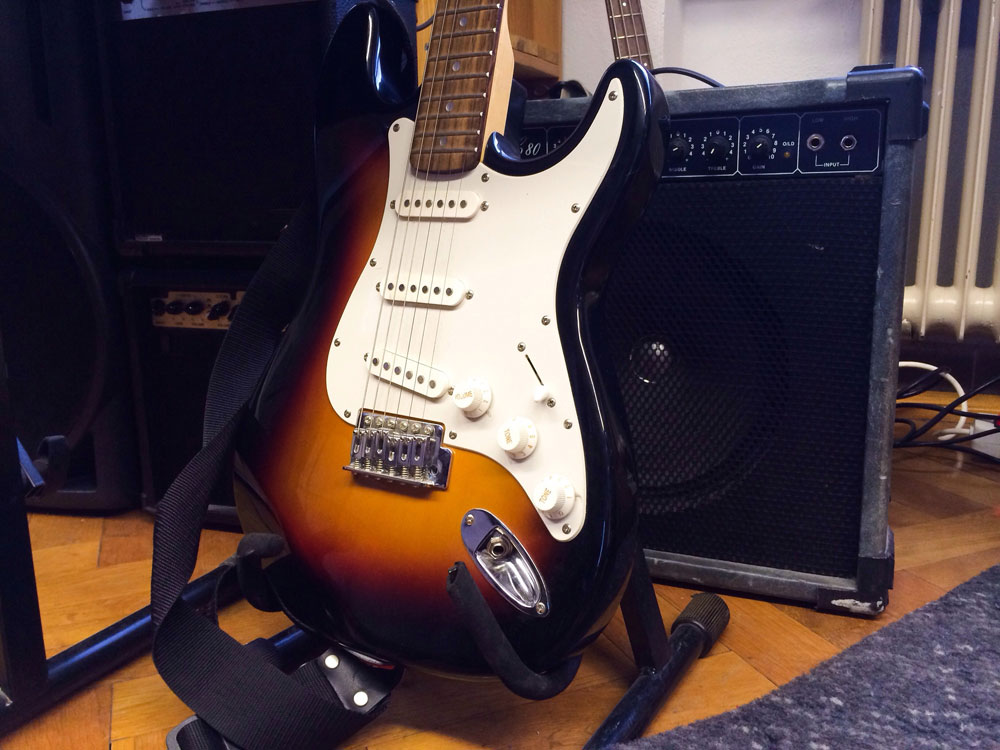
The rehearsal space is also a critical area for practising your set. Your set is the songs you will play live during a performance. There is nothing more irritating than watching a band play live that doesn’t know what song comes next. Sometimes in the heat of the moment the crowd can and will dictate to you what song they want to hear next. But that only generally happens to very well-established artists who have had radio and TV hits and whose songs the audience knows. When starting out, you still need to impress. A band that has the ability to play its half-hour or 45-minute set without hesitation or ungainly pauses is impressive. This can only be achieved by deciding on the set order for shows in the practice room. Keep it fresh though: change it around before gigs; try things in different orders. Rehearse the live set in roughly the order that it will be played at the next show.
Breaks and speeches
Part of this is planning breaks and speeches. The singer needs to think about what to say in-between songs in the practice room. It is totally normal for an inexperienced front person to freeze up in front of a crowd and mumble stupid comments. But if time has been spent in the practice room thinking this aspect through, then at least he has some ideas to fall back on, even if he is nervous and still doesn’t do it very well. This is particularly important if the band has different tunings in songs. The group needs to practise how and where these changes will take place live and also how to keep the audience’s attention while they are taking place. If the singer is not good at it, it’s fine if the bass player, drummer, keyboard player, trombonist or B-boy does it – as long as someone does! Practice so that what is said contributes to the show and is meaningful. These pauses are also an opportunity to impress and recruit fans. Don’t waste them by not knowing what to say.

For example, breaks between songs are great times to announce your web address; to remind people to add their names to the list at the door to hear about more shows; to push the merchandise you are selling; to announce a new show next week; to announce that your single is on radio, your video on TV. You can thank people, throw out free merchandise, give the band’s name, introduce the band, thank the venue and the sound guy. The list is virtually endless, but if you’re not thinking about it beforehand, chances are you’re not just going to come up with it on stage.
Next week: Perfect your live performance
Originally published in David Chislett's One, Two, One, Two: A Step By Step Guide To The South African Music Industry. Download a free copy of the book at www.davidchislett.co.za.

[David Chislett]
David Chislett is a multi-talented South African speaker and writer. He graduated to national radio in 1994 when Barney Simon used him as a live radio correspondent on 5FM from London. David delivers a key note address, “Unleash Your Inner Rockstar” with Martin Schofield which teaches the hidden secrets of success from the music industry to businesses.