



How to
Playing live: How to get gigs
David Chislett | 28 Oct 2014 6:30 AM
This question is one that seems to stump many a new band. There are two key factors that you need to bear in mind when starting to play live and getting gigs.
Firstly, you need to have a plan and secondly, you need to do some homework.
When you think that you have rehearsed enough and you have enough songs to play a complete half-hour to forty-five-minute set, then you need to decide how you want to approach gigging. By putting together a simple six-month plan, you can set your group some short-term goals and work hard towards distinct deliverables. This has the dual effect of motivating everyone and setting a bar against which you can compare yourselves in the future. As a starting point you could decide that for three months you want to play one show a month. The idea behind playing so few is to make sure you have time to learn from whatever happens on stage. Then for the second three months, aim for twice a month. This six-month period will give your outfit nine live shows, which you can use as experience to learn from and grow.
Mix of shows
In addition to deciding the frequency of shows for these first six months, you must also plan what kind of shows you want to play. Do you want to try some anonymous audition nights on a Tuesday night? Do you want to get support slots with bigger bands or play in a multi-band line-up? Since this is the learning phase of your gigging career, go for a mix of shows. Out of the nine shows you want to play, try and make two of them support slots for better-known bands. Play a couple of freebies just for the live experience and then try and play with other bands who are maybe slightly better established than you. Also make sure you play a range of different venues.
Once you have this plan in place, you are ready to actually start getting gigs. This is where the homework comes in. By this stage, you will know what style you are playing and have an idea of where you want to go. Now you need to establish who you can conceivably play with and where the venues are in your town that host live music. The Mail & Guardian gig guide is a good place to start. Not only is it comprehensive, featuring a range of genres and venues, it also gives addresses and telephone numbers so you can get in touch with the venues. Read this for a couple of weeks so you can get a feel for the venues that typically host your style of music and then start going there. If your town doesn’t feature in this guide, check all your local press, check with your local radio station and search online. Try calling anyone you know who plays music to source the venues that way.
Build relationships
When you visit the venues you have identified, check out the sound. See if there’s an engineer, watch the bands and see what they do. Make an effort to meet people. Ask who does the bookings, speak to the engineer and, most importantly, speak to the bands that are playing and their managers. This is all done to give you as much information about the place as possible and to build relationships within the industry. Making friends with other bands means there are people you can approach for shows and their managers know who they can book for support. It also means that when you call up to try and book a gig they already know who you are. Even if they don’t remember precisely, being able to say that you met on such and such a night through such and such a person makes you less anonymous than just another band on the phone. It also proves that you are serious and prepared to work to make sure you get the right venue.
In order to book a show you need to demonstrate to the agent/promoter/club owner that you are serious, can play and can pull a crowd. To do this you need a set of materials - this of course includes your biography (and it needs to be updated regularly), a photo or two of the band and preferably a demo recording of your music. These items together show that you have spent time thinking about the band and you have spent money on it as well. All of which means that you have a vested interest and are less likely to not show up. When you have played no shows at all, getting booked without a demo is hard, but not impossible. This is where speaking to other bands comes in.
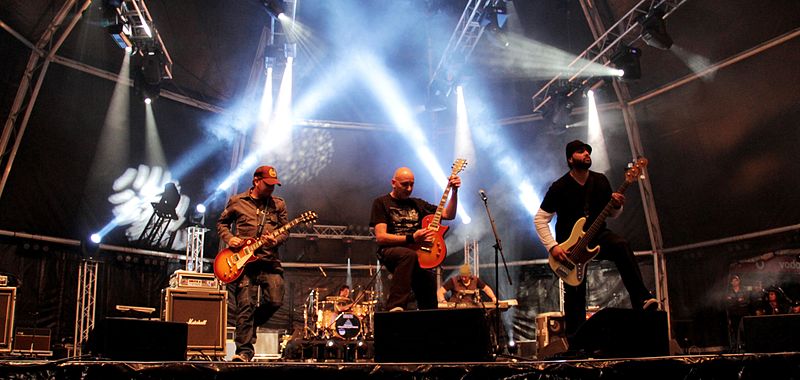
Prime Circle
Enthusiastic and flexible
But generally you will approach the person responsible for booking shows and ask when s/he has open slots available to book new bands. Deliver your materials and explain that you are a new band looking to make a start and that you are keen to open for bigger bands or play with a couple of other acts on any one night. Make it clear that, while you are professional, you are also enthusiastic and flexible. Assuming this person is happy with what you say and ask for, they will give you a date. Make sure that this date goes into the venue’s roster or timetable of shows and that you record the date and time correctly.
Key questions to ask are: “Are a PA and engineer supplied or not? What lighting is available? Is a door person supplied? What is the financial deal: will a guarantee be paid or will you earn a percentage of the door? Are there other bands playing? Get their contact details. Who is doing the marketing, and what marketing is being planned? Is there a contact name and number that you can use in order to fine-tune all the details?” Once you have this information, you can go back and start work. Make sure to call a few days later to confirm the date telephonically. This will serve two purposes. Once again, it is the professional thing to do. Secondly, it makes sure that the date is in fact booked and that there are no conflicts, so you can proceed with the other arrangements with confidence.
Experience is crucial
To get a gig like this you may well need to be able to boast of previous shows. This is where knowing other bands becomes crucial. For your first couple of shows, try and get to play with other bands that are already booking regular shows. Ask to open for them, to play a short set and to help out wherever you can. By doing this you can learn everything you can from them, get some crucial experience and start to build a fan base. If when you speak to a club owner on your own you can list three or four other bands with whom and venues where you have played already, they will be far more amenable to letting you play.
No matter how you are booking your shows, remember to make sure you get all the facts up front and in detail. Once you have this, put it all into one document for ease of reference, then send this document to the person responsible for the booking and ask them to check it.
Next week: Playing live: sound
Originally published in David Chislett's One, Two, One, Two: A Step By Step Guide To The South African Music Industry. Download a free copy of the book at www.davidchislett.co.za.

[David Chislett]
David Chislett is a multi-talented South African speaker and writer. He graduated to national radio in 1994 when Barney Simon used him as a live radio correspondent on 5FM from London. David delivers a key note address, “Unleash Your Inner Rockstar” with Martin Schofield which teaches the hidden secrets of success from the music industry to businesses.